Guizhou Association (Singapore)
UEN: T13SS0133J
The Guizhou Association (Singapore) is a community organisation rooted in Singapore and connected to Guizhou. Dedicated to fostering hometown bonds and serving fellow Guizhou natives, it promotes cultural, economic and social exchange between Guizhou and Singapore.
Guizhou Province is located in the heart of Southwest China, on the eastern part of the Yunnan-Guizhou Plateau. It borders Chongqing and Sichuan to the north, Hunan to the east, Guangxi to the south, and Yunnan to the west. It serves as a crucial southwestern land transportation hub connecting the Chengdu-Chongqing Economic Circle, the Yangtze River Delta, and the Guangdong-Hong Kong-Macau Greater Bay Area. The province covers a total area of 176,000 square kilometres, characterised by widespread karst topography, crisscrossing rivers, and mountains and hills accounting for over 90% of its total area. Guizhou enjoys a subtropical humid monsoon climate with four distinct seasons, abundant rainfall, cool and pleasant summers, and mild and humid winters. With a high forest coverage and superior ecological environment, the province is known as a "park province", showcasing a harmonious coexistence between humans and nature. The booming development of the big data industry has made "Digital Guizhou" a leading name in the digital economy of China and the world.
Guizhou boasts a long history and profound cultural heritage, historically a melting pot of cultures from Yelang, Zangke, and Shuixi. After officially becoming a province in the Ming Dynasty, the interaction among various ethnic groups and the flourishing of mountain trade shaped the open, inclusive, resilient, and simple culture of central Guizhou. This region is home to a diverse range of ethnic groups, including the Han, Miao, Buyi, Dong, Tujia, and Yi, who have lived and worked together for generations. The region's pristine ethnic cultures, traditional villages, and national intangible cultural heritage shine brightly. Simultaneously, this land carries a deep historical legacy; the Zunyi Conference during the Long March marked a significant turning point here, infusing modern Guizhou with a pioneering and enterprising spirit. Modern Guizhou has gained a competitive edge through big data and electronic information industries, and continues to strengthen its pillar industries, including sauce-aroma (jiangxiang) baijiu, advanced equipment manufacturing, new energy battery materials, new functional materials, and modern energy. Leveraging its extensive network of aviation, high-speed rail, and highways connecting domestic and international markets, Guizhou is accelerating its integration into the global industrial chain. The "Guizhou Products to Market" initiative is progressing in tandem with new industrialisation and the development of cultural tourism and health industries, unleashing a powerful transformative vitality.
To appreciate the beauty of Guizhou, begin with the misty Huangguoshu Waterfall and the crystal-clear Xiaoqikong Scenic Area in Libo. Experience the breathtaking natural wonders of Mount Fanjing and Chishui Danxia, both World Natural Heritage sites, and explore the fantastical underground karst world at Zhijin Cave and Longgong. For a touch of cultural warmth, visit Xijiang Miao Village and Zhaoxing Dong Village to hear the echoes of history, admire the poetic landscape of Wanfenglin and Jiabang Terraces where fields and peaks intertwine, or experience the slow-paced beauty of nature in the night at Zhenyuan Ancient Town and Wujiangzhai Village. In the evening, stroll through Qingyun Market or the old town streets, savouring local delicacies like sour fish soup, siwawa (vegetable-filled pancake wraps), Changwang noodles, various mutton rice noodles, and laoguo (Guizhou griddle barbecue), followed by a glass of rich, savoury baijiu. Feel the overwhelming enthusiasm from the stands at Rongjiang's "Village Super League" football matches, or gaze at the dazzling starry sky beneath the "China Sky Eye" (FAST radio telescope) in Pingtang. Guizhou's appeal lies not only in its magnificent natural landscapes and cutting-edge modern technology, but also in the relaxed, warm, and vibrant everyday life amidst its mountains and rivers.
Guiyang, located in central Guizhou and eastern Yunnan-Guizhou Plateau, is the capital of Guizhou Province and an important political, economic, cultural, scientific, educational, and transportation centre. The area is characterised by mountains, valleys, and forests, and enjoys a subtropical humid monsoon climate with cool, comfortable summers and mild, humid winters. "Cool Guiyang" showcases its liveable and tourist-friendly ecological qualities, while "China's Digital Valley" serves as a vivid window into the development of Guizhou's digital economy.
Guiyang, formerly known as "Zhu", gradually became the political and cultural centre of Guizhou Province after its establishment in the Ming Dynasty. Interactions among various ethnic groups and mountainous trade have shaped the city's open and inclusive character. Guiyang excels in big data and electronic information industries and continues to develop advanced equipment manufacturing, new energy vehicles, phosphate chemicals, and eco-friendly food industries. Guiyang and Gui'an New Area are developing in synergy, with data centres, computing networks, and digital applications rapidly clustering. New urban areas like Guanshanhu showcase a modern metropolitan appearance, while the old city streets, commercial districts, and convention and exhibition economy retain a distinct sense of local life.
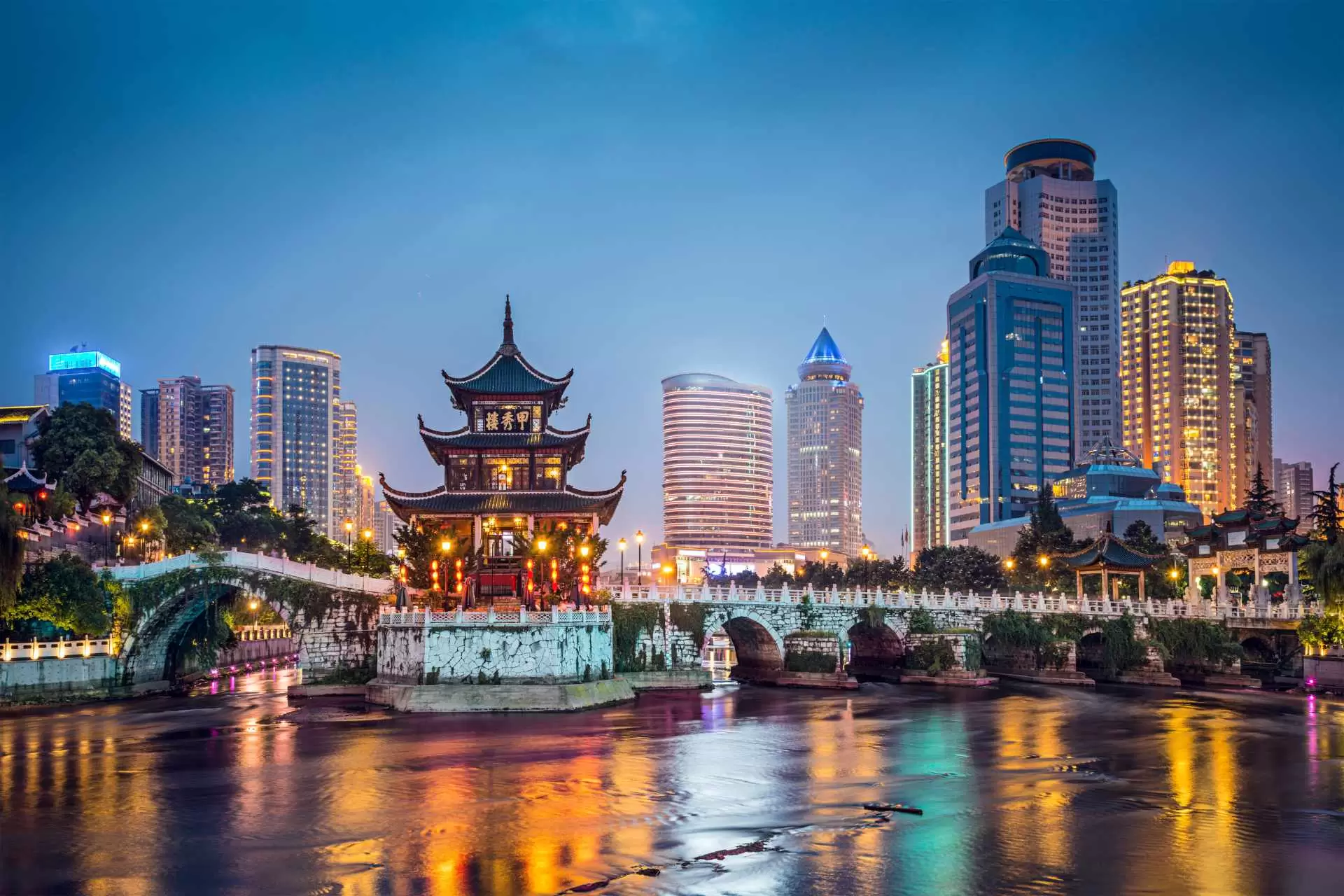
To get acquainted with Guiyang, begin at Jiaxiu Tower and Nanming River, then experience the harmonious blend of mountains and city at Qianling Mountain Park, and explore the stone alleys, city walls, and Ming and Qing dynasty architecture of Qingyan Ancient Town. Huaxi Wetland, Gaopo Mountain, and Tianhetan are perfect for a leisurely stroll and a cool respite from the summer heat. In the evening, wander through Qingyun Market or the old town streets to savour local delicacies like siwawa (vegetable-filled pancake wraps), "changwang noodles", "love tofu" and sour soup. If time permits, experience the local teahouses, cafes, and nightlife: Guiyang's allure lies not only in its scenic spots, but also in the relaxed, vibrant, and down-to-earth daily life amidst its natural beauty.
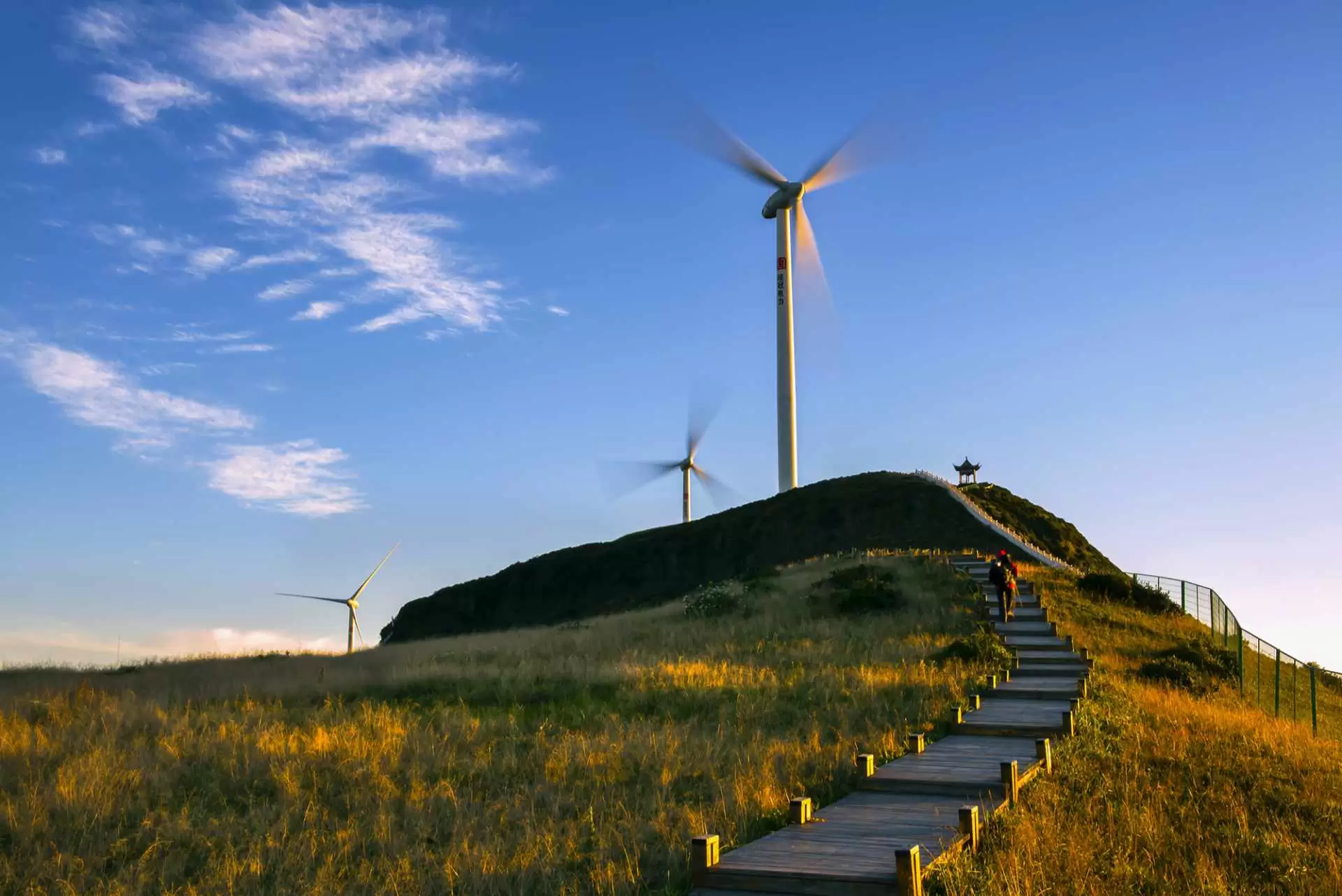
Liupanshui, located in the Wumeng Mountains of western Guizhou, connects to Yunnan and serves as an important passage and regional transportation hub for Guizhou's westward opening. Its low latitude and high altitude create a climate characterised by cool summers and winters well suited to snow sports, earning it the title of "China's Cool Summer Capital". Mountains, canyons, grasslands, and the city intertwine to form a magnificent and refreshing plateau landscape.
Liupanshui prospered due to the national "Third Front" construction. Its name derives from Liuzhi, Panzhou, and Shuicheng, reflecting the intertwining of industrial history and the cultures of the Yi, Miao, and Buyi ethnic groups. As an energy and raw material industrial city, Liupanshui has established a foundation in coal, electricity, and steel industries, and is extending its reach to new energy, new materials, equipment manufacturing, and the intensive processing of resources. Modern mountain agriculture, health and wellness tourism, and cultural and sports tourism are continuously expanding the city's development space, while railways, highways, and logistics networks connect it to the Yunnan-Guizhou region. The solid foundation of its industrial past combined with its green transformation constitutes the source of Liupanshui's vitality today.
In summer, you can climb the Wumeng Grassland to see the sea of clouds, meadows, and herds of cattle and sheep; wander through the forests and Yi villages at Yeyuhai to experience the excitement of the Torch Festival; and in autumn, visit Tuole Ancient Ginkgo Village, where golden leaves contrast beautifully with the stone houses. Meihua Mountain is ideal for sightseeing, skiing, and mountain sports, while the Beipanjiang Canyon and Gaoqiao landscape showcase the grandeur of Guizhou's transportation and karst topography. Be sure to try the local delicacies along the way, such as Shuicheng mutton rice noodles, Liupanshui laoguo, and Panzhou ham. A trip to Liupanshui offers not only a cool respite from the summer heat but also a chance to witness the growth of a young city through its industrial heritage, ethnic festivals, and outdoor activities.
Zunyi, located in northern Guizhou, borders Chongqing and Sichuan to the north. Nourished by the Wujiang and Chishui River systems, its mountains and valleys serve as a crucial gateway connecting Guizhou to the Chengdu-Chongqing region. The area enjoys a subtropical humid monsoon climate with four distinct seasons and abundant rainfall, combining the refreshing coolness of the northern Guizhou mountains with the warmth of the river valleys. As a National Famous Historical and Cultural City, Zunyi is widely known for its revolutionary history as a "city of turning points" and its rich culture of sauce-aroma (jiangxiang) baijiu.
Bozhou culture has endured for millennia, and Hailongtun bears witness to the history of the Tusi (chieftain) system. The Zunyi Conference, held in 1935, marked the city as the site of the "Great Turning Point" in revolutionary history. Zunyi is best known for its sauce-aroma baijiu industry, and has formed diversified industries such as energy, new materials, advanced equipment, ecological food, and modern agriculture. Renhuai Maotai Town connects the traditional and modern industrial chains of brewing, while county-specific products such as Zheng'an guitars are reaching a wider market. The central urban area has well-developed commercial, educational, medical, and transportation functions, and red tourism, summer resorts, and rural tourism are together driving consumer spending.
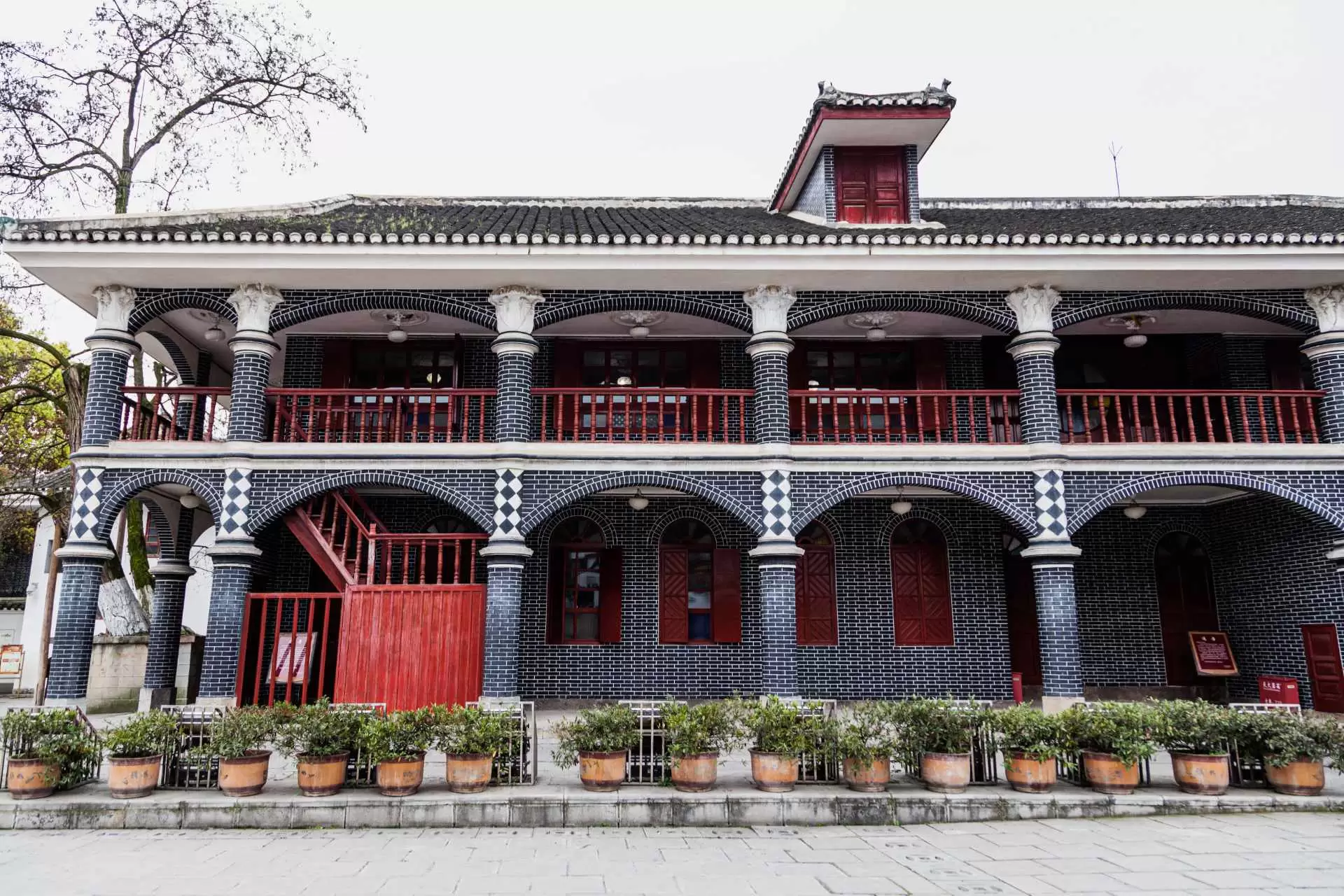
A trip to Zunyi can begin with the Zunyi Conference Site, Red Army Street, and Loushan Pass, allowing you to understand the crucial turning point of the Long March firsthand. Then, explore Chishui Danxia, Chishui Waterfall, and the Bamboo Sea, witnessing the red cliffs, waterfalls, and bamboo forests unfold like a scroll painting of northern Guizhou. The Hailongtun Tusi Site is ideal for exploring the ancient mountain city's defence system, while Wujiangzhai Village offers a different kind of lifestyle aesthetic with its northern Guizhou villages, waterscapes, and nighttime tours. In Maotai Town, you can learn about the environment and craftsmanship of Maotai liquor brewing, and also try local delicacies such as mutton rice noodles, tofu noodles, Zunyi steamed sponge cakes, and Chishui bamboo shoots. Red history, world heritage, and the vibrant local life are naturally intertwined here.
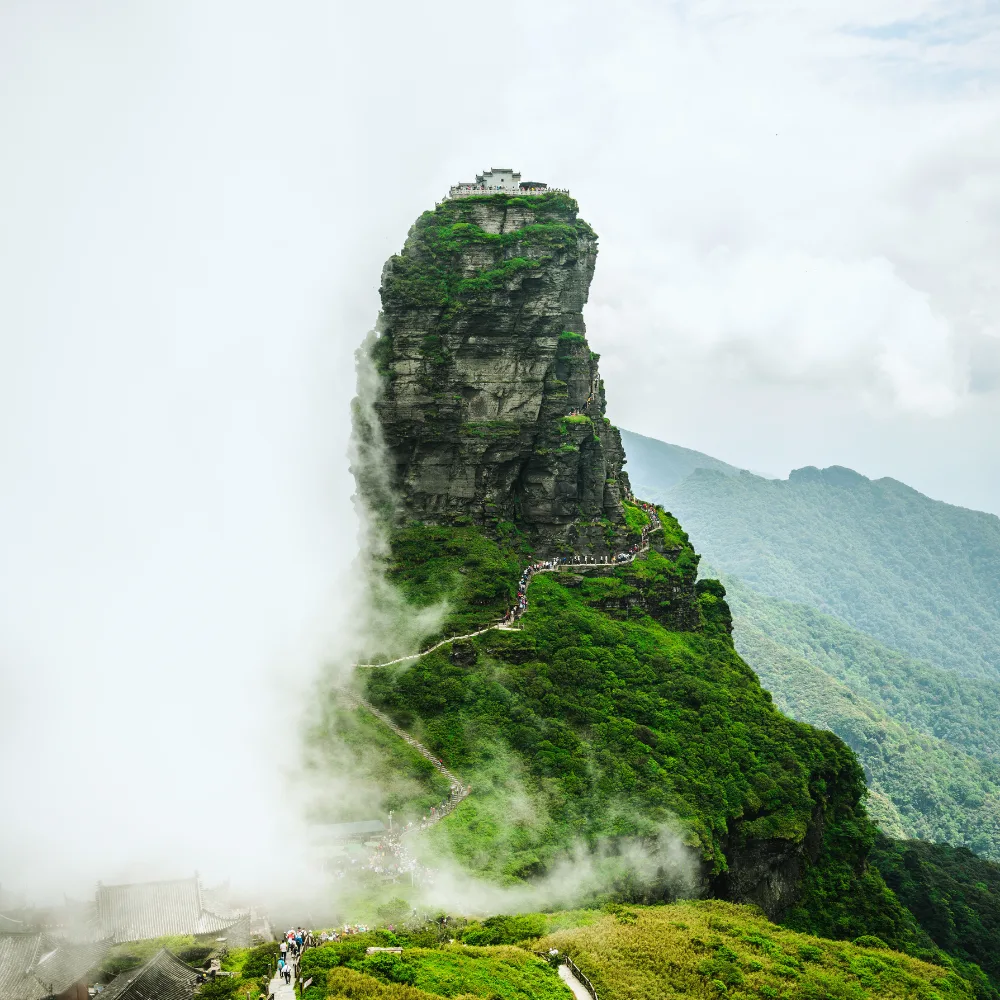
Tongren is located in northeastern Guizhou Province, bordering Hunan to the east and Chongqing to the north. Lying where the Wuling Mountains and the Guizhou Plateau give way to the hills of western Hunan, it is known as the "Gateway to Eastern Guizhou". The area has a subtropical humid monsoon climate, with numerous rivers and lush forests, and the Jinjiang River flows through the city. Mount Fanjing, a World Natural Heritage site, is not only Tongren's most prominent ecological landmark but also a testament to the biodiversity and unique landscape of the Wuling Mountains.
After Tongren Prefecture was established during the Ming Dynasty, the Jinjiang River trading port gradually became a transportation hub in eastern Guizhou. Long-term interactions among the Tujia, Miao, and Dong ethnic groups have left behind diverse folk customs and intangible cultural heritage. Relying on its mineral, ecological, and agricultural resources, Tongren focuses on developing new functional materials, ecological food and beverages, health and medicine, modern energy, and specialty agriculture. The deep processing of manganese resources continues to transform and upgrade, while ecological products such as matcha, tea, drinking water, and "Fanjingshan delicacies" are constantly extending their value chains. The central urban area is developing along the Jinjiang River, with modern service industries, cultural tourism and health care, and regional commerce jointly shaping a new landscape for this mountain and water city.
Climbing Mount Fanjing, you can experience natural wonders amidst the Mushroom Rock, Red Cloud Golden Summit, and sea of clouds; strolling along the Jinjiang River, you can feel the leisurely pace of Tongren City. Shiqian Hot Springs are perfect for relaxation and rejuvenation, Wanshan Zhusha Ancient Town preserves mining relics and industrial memories, Jiulong Cave showcases karst cave landscapes, and the ethnic villages of Songtao and Yinjiang present the lifestyle and customs of the Miao and Tujia peoples. Local specialties like Shefan (a type of rice dish), Guoba Fen (crispy rice noodles), Jiangkou Rice Tofu, and mung bean noodles are simple yet distinctive. Tongren is best enjoyed at a slower pace: watch the clouds from the mountains in the morning, explore ancient towns in the afternoon, and savour the local flavours of eastern Guizhou by the river at night.
Anshun is located in the central and western part of Guizhou Province, in the heart of the region, adjacent to Guiyang, and serves as an important node connecting central and southwestern Guizhou. Its extensive karst landforms, with river drops creating waterfalls, canyons, caves, and peak forests, combined with a subtropical humid monsoon climate that brings cool and pleasant summers, have made it a popular destination. "China's Home of Waterfalls" and "The City of 21°C" have long been Anshun's city slogans, capturing its natural beauty and its appeal as a summer retreat.
Anshun, historically a vital transportation hub in central Guizhou, is home to Tunpu culture, which began with Ming-dynasty garrison settlements more than 600 years ago and has fostered unique traditions in architecture, dress, dixi (ground opera) and cuisine. Anshun possesses a manufacturing base, exemplified by aviation equipment, and is developing modern energy, new materials, specialty light industry, and eco-friendly food industries. The Huangguoshu Waterfall tourist area has spurred the continuous enrichment of cultural tourism, accommodation, catering, and health and wellness sectors, while modern mountain agriculture and agricultural product processing showcase regional characteristics. Leveraging its proximity to Guiyang and Gui'an and its convenient transportation links, Anshun is strengthening industrial collaboration and public service integration.
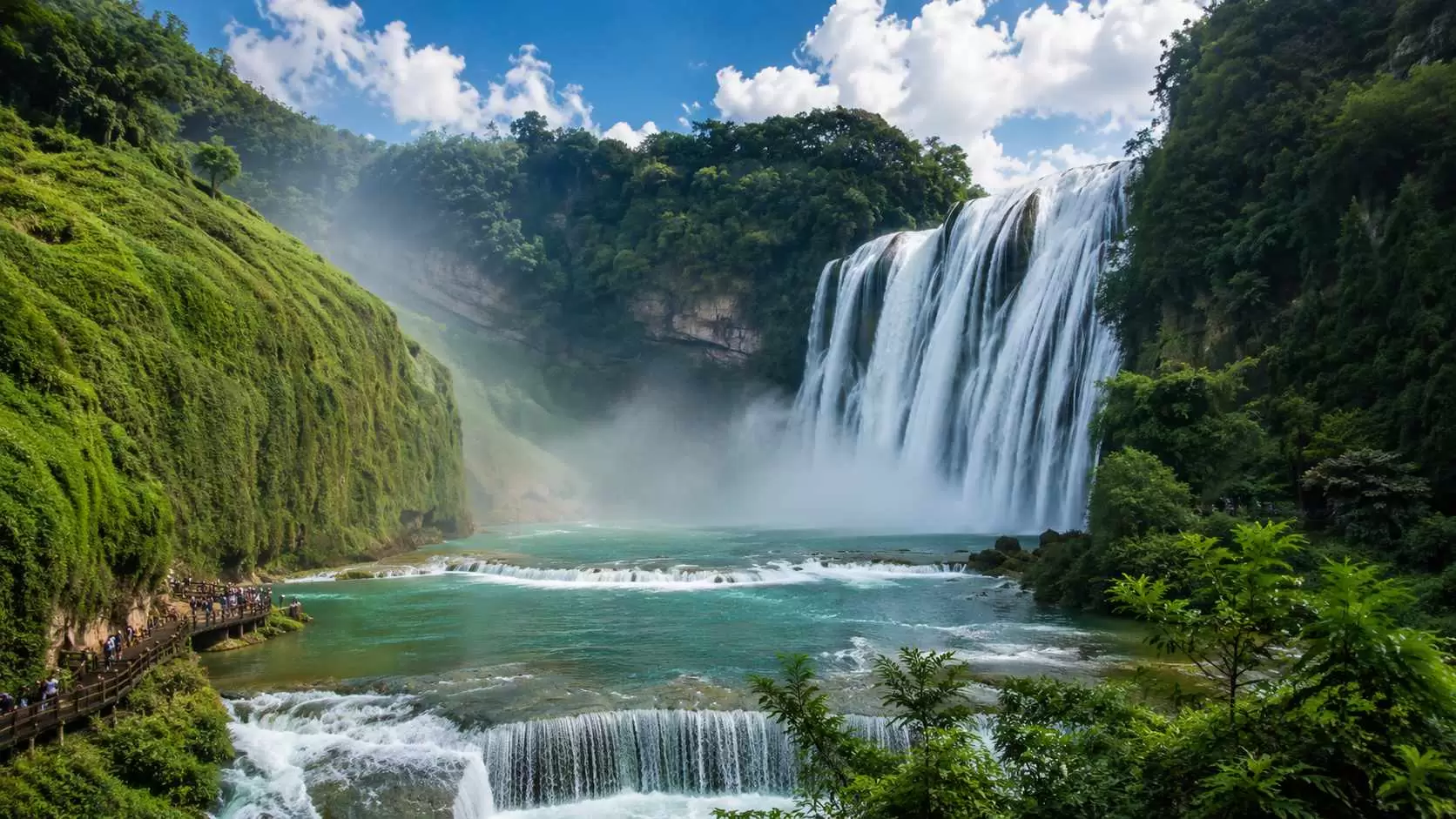
Huangguoshu Waterfall is the most breathtaking starting point for understanding Anshun: the Water Curtain Cave, Doupotang Waterfall, and Tianxing Bridge together create a rich and layered waterfall experience. Longgong offers boat trips into underground rivers and karst caves, while Getu River is perfect for experiencing canyons, caves, and mountainous outdoor landscapes. Visiting Tianlong Tunpu, Yunfeng Bazhai, or Jiuzhou Ancient Town allows you to see stone houses, listen to local opera singing, and understand how the "legacy of the Ming Dynasty" has been preserved to this day. Anshun's wrapped rolls, Duoduo rice noodles, Posu buns, buckwheat jelly, and Bobo candy are must-try flavours found in the streets and alleys. The spectacular natural scenery and the rich culture of the Tunpu people make Anshun both magnificent and inviting for careful appreciation.
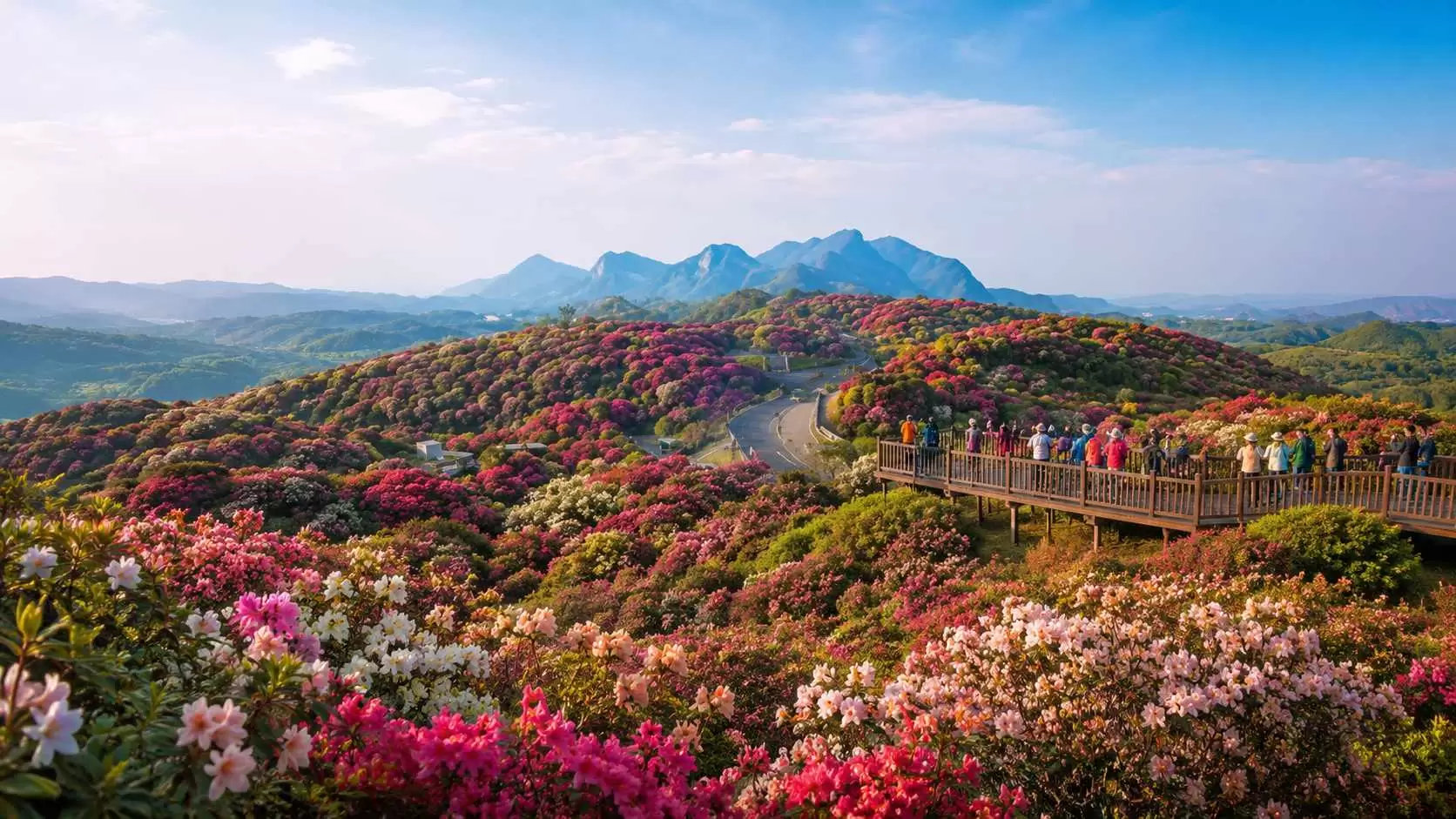
Bijie is located in northwestern Guizhou, bordering Sichuan and Yunnan provinces, nestled in the heart of the Wumeng Mountains. It serves as a crucial gateway for Guizhou to Sichuan and Yunnan. Its diverse landscape, including plateaus, mountains, canyons, lakes, and karst caves, boasts a mild climate and cool summers. The phrase "Bijie: A Paradise of Caves and Flowers" encapsulates its natural charm: underground cave wonders, mountainsides ablaze with rhododendrons, and expansive plateau wetlands and grasslands.
Bijie is an important area of ancient Yelang activity and a significant repository of the Yi ethnic group's Shuixi culture. The story of Lady Shexiang opening the post road still resonates in the cultural memory of the Wumeng Mountains. Bijie relies heavily on energy, modern chemical industry, new energy, and new materials industries, while also developing distinctive mountain agriculture such as potatoes, beef cattle, tea, and traditional Chinese medicine. Ecological food processing, cultural tourism and health care, and modern service industries are continuously growing, and county-level industries and urban functions are gradually improving. As a crucial regional centre in the Wumeng Mountains, Bijie is also more closely integrating ecological governance, rural revitalisation, and industrial transformation.
In spring, the Baili Rhododendron Scenic Area is ablaze with rhododendrons of every hue, covering the rolling hills. Entering Zhijin Cave, one can experience the underground world amidst a magnificent array of stalactites and stalagmites. Weining Caohai is ideal for birdwatching and exploring highland wetlands, while the mountain flower fields of Jiucaiping and the Wumeng Grassland are perfect for hiking. The Wujiangyuan Hundred-Mile Gallery is renowned for its canyons, clear waters, and towering peaks. During your trip, you can sample local delicacies such as Bijie Tangyuan (sweet rice balls), Weining buckwheat cakes, Dafang bean products, and Zhijin buckwheat jelly. Enjoying flowers, exploring caves, birdwatching, escaping the summer heat, and listening to a story from Shuixi will allow you to experience the vast, rustic, and multifaceted charm of Bijie.
Qiandongnan Miao and Dong Autonomous Prefecture is located in southeastern Guizhou Province, bordering Hunan Province to the east and the Guangxi Zhuang Autonomous Region to the south. Its capital is Kaili City, and it serves as an important passage from Guizhou to the Yangtze River Delta and the Guangdong-Hong Kong-Macao Greater Bay Area. The prefecture is characterised by rolling mountains and dense forests, with the Qingshui River and Duliu River flowing through it. It has a subtropical humid monsoon climate. Often referred to as the "Home of the Miao and Dong" and the "Land of a Hundred Festivals", it boasts a particularly rich collection of traditional villages and ethnic cultures.
The Qiandongnan Miao and Dong Autonomous Prefecture was established in 1956. The Miao, Dong, and other ethnic groups have lived together for generations, and the Grand Song of the Dong (Kam Grand Choirs), Miao embroidery, silver ornaments, and traditional villages form a vibrant cultural tapestry. Relying on its ecological and ethnic cultural resources, Qiandongnan is developing eco-friendly specialty foods, timber and furniture processing, ethnic medicine, modern mountain agriculture, and cultural tourism, while also cultivating industries such as new energy and new materials, and electronic information. Kaili sour soup, blueberries, tea, and specialty poultry and livestock products are gradually reaching wider markets, while traditional crafts such as silver ornaments, embroidery, and batik are being revitalised through design, research, and cultural and creative industries.
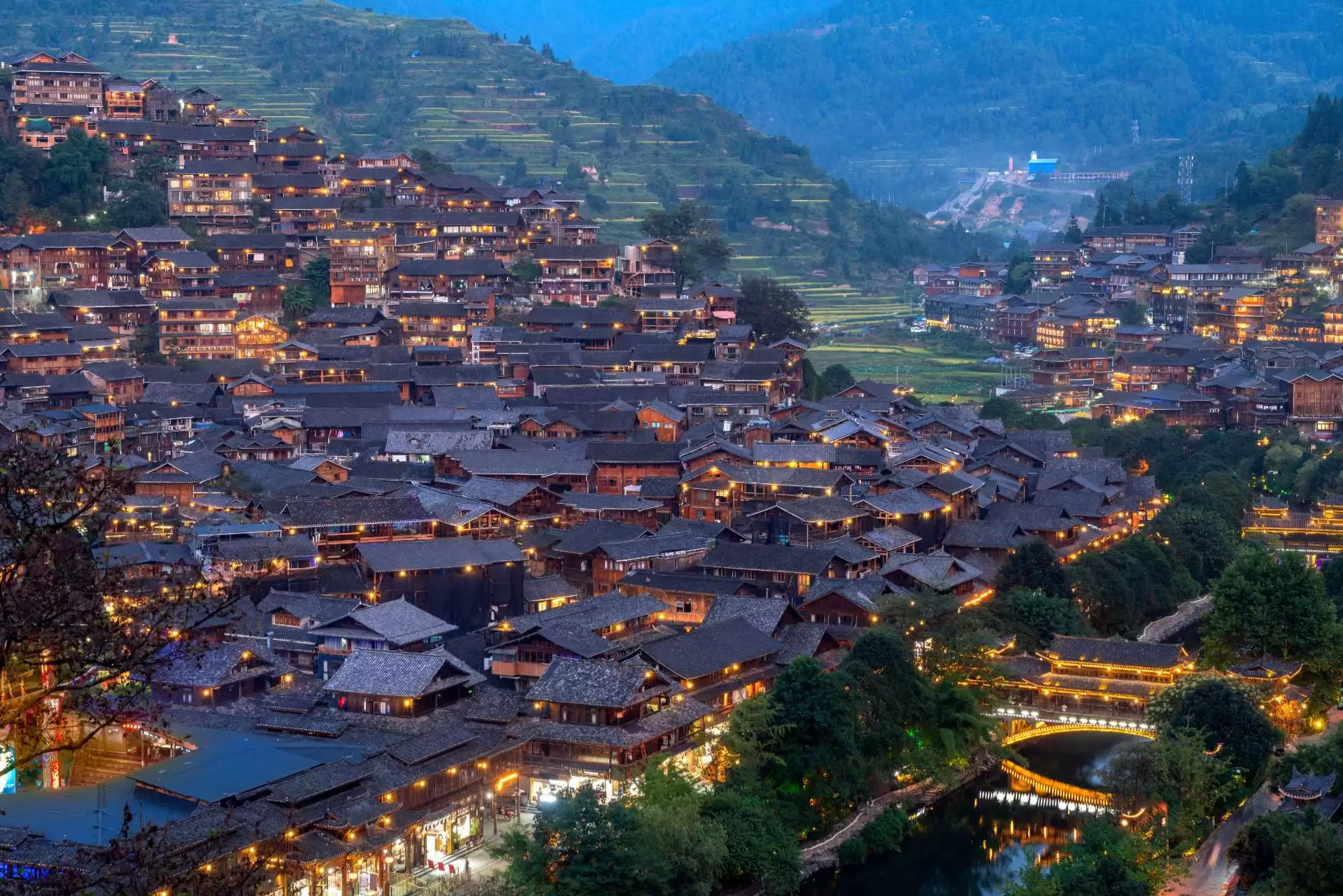
Xijiang Miao Village offers a glimpse into Miao life through its stilted houses, long table banquets, and nighttime views; Zhaoxing Dong Village presents a different kind of village order with its drum towers, flower bridges, and the Grand Song of the Dong. Zhenyuan Ancient Town stretches along the Wuyang River, with the Qinglong Cave ancient architectural complex reflecting the riverbank at night; Jiabang Terraces, Leigong Mountain, and Jianhe Hot Springs are perfect for a leisurely, nature-focused trip. In Rongjiang, catch the excitement of the "Village Super League" football matches and witness the Miao New Year, Sisters' Festival, Dong New Year or the Miao dugout-canoe dragon boat festival. The sour soup fish, glutinous rice, pickled fish, and niubie (bitter beef hot pot) have distinct flavours; for a deeper understanding of Guizhou's ethnic culture, Qiandongnan is worth a longer stay.
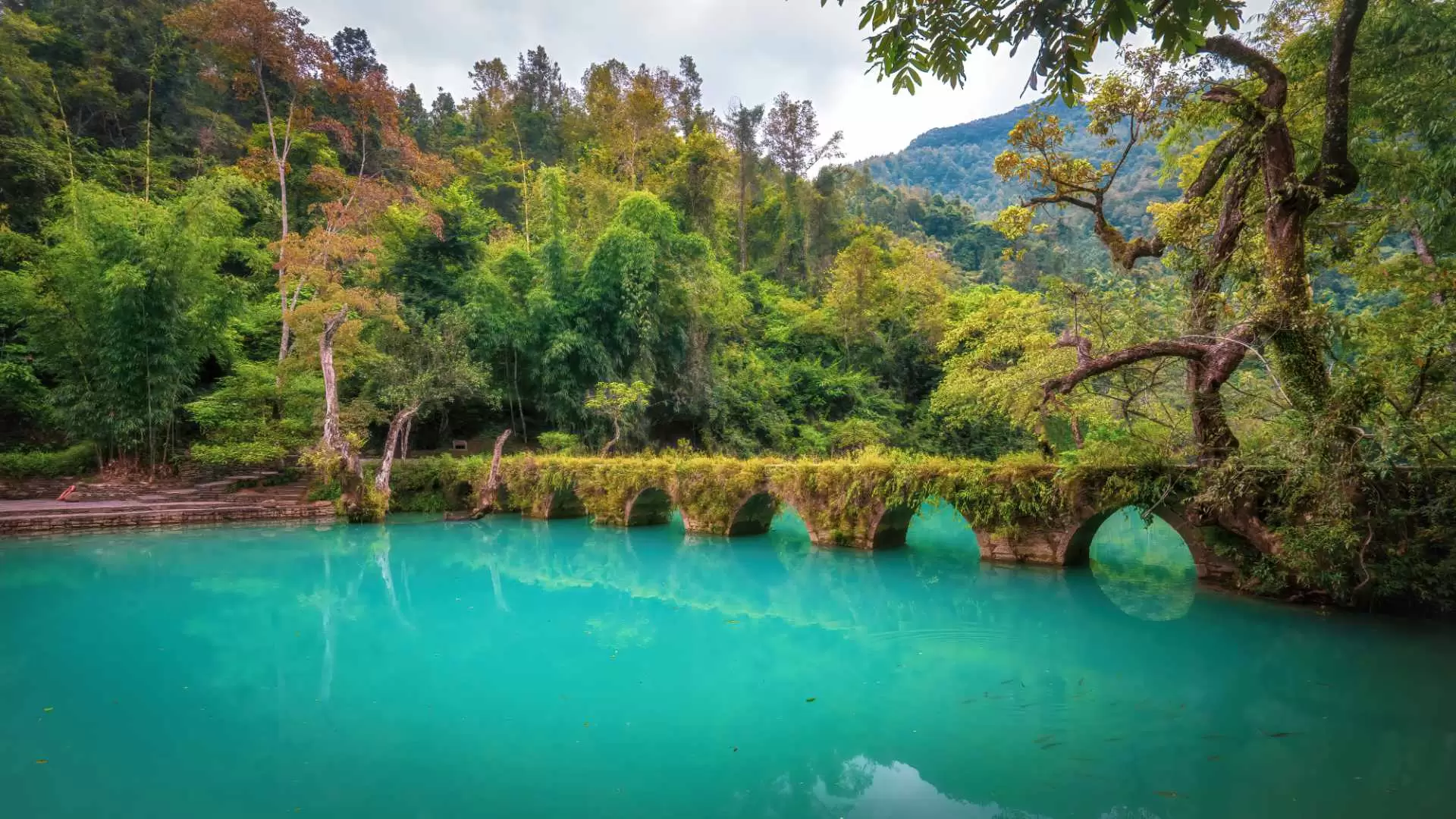
Qiannan Buyi and Miao Autonomous Prefecture lies in south-central Guizhou, bordering the Guangxi Zhuang Autonomous Region to the south and Guiyang to the north. Its capital is Duyun, and it is Guizhou's main gateway to southern China. The land descends from a northern plateau to river valleys in the south, where karst peak forests, woodland and rivers interweave under a humid subtropical monsoon climate. The Libo World Natural Heritage site and the "China Sky Eye" (FAST radio telescope) in Pingtang are Qiannan's best-known natural and scientific landmarks.
In ancient times, Qiannan lay within the Zangke and Yelang cultural areas; the autonomous prefecture was established in 1956. The Buyi, Miao, Shui and other ethnic groups have long lived side by side, preserving distinctive traditions such as the Shui script and the Duan Festival. Qiannan's economy is led by modern chemicals and new-energy battery materials, supported by modern energy, new building materials, equipment manufacturing, electronic information and eco-friendly food. Phosphate processing is moving towards greener, higher-value products, while specialities such as Duyun Maojian tea, cili (Rosa roxburghii) fruit and Chinese medicinal herbs link mountain farming with consumer markets. Duyun, Longli and other areas are working more closely with Guiyang, and transport, logistics and modern services continue to improve.
In Libo, Xiaoqikong combines clear water, ancient bridges, waterfalls and forest in a crystal-clear karst landscape, while Daqikong offers more dramatic gorges; Maolan is ideal for venturing into primeval forest and hidden karst peaks. In Pingtang, visit the China Sky Eye science centre and see this major scientific facility for yourself, observing the radio-silence rules. In Duyun, stroll along the Jianjiang River, explore the old flagstone streets and enjoy a cup of Duyun Maojian tea; the Shui villages of Sandu and the ancient Yao village of Yaoshan in Libo offer the Shui script, horsetail embroidery and ethnic festivals. Local flavours such as sour-shrimp beef, chongchong cake (steamed rice cake) and fish stuffed with chives make a trip to Qiannan a blend of landscapes, science and warm hospitality.
Qianxinan Buyi and Miao Autonomous Prefecture is located in southwestern Guizhou Province, where Yunnan, Guizhou and Guangxi meet. Its capital is Xingyi City. The Nanpan and Beipan Rivers have carved through the plateau, creating a karst landscape of peaks, canyons, lakes, and waterfalls. Its low latitude and high altitude contribute to its mild climate, making it suitable for travel year-round. Home to the Xingyi UNESCO Global Geopark and known as "China's Four-Season Wellness Capital", Qianxinan has a distinctive regional identity.
This area was historically part of the Zangke culture region, and the autonomous prefecture was officially established in 1982. The cultures of the Buyi and Miao ethnic groups, along with the lifestyle along the Nanpan and Beipan Rivers, have collectively shaped the "Golden Prefecture's" culture. Qianxinan Prefecture leverages its energy, mineral, hydropower, and mountain resources to develop modern energy, new materials, specialty light industry, ecological food, and modern agriculture. Its products, such as Job's tears, tea, and premium fruits, have a distinctive local identity. Xingyi is a regional centre for commerce, transportation, and public services. Its cultural tourism, health and wellness, outdoor sports, and rural tourism are continuously enriching its industrial structure, allowing its natural resource advantages to be more directly integrated into urban life.
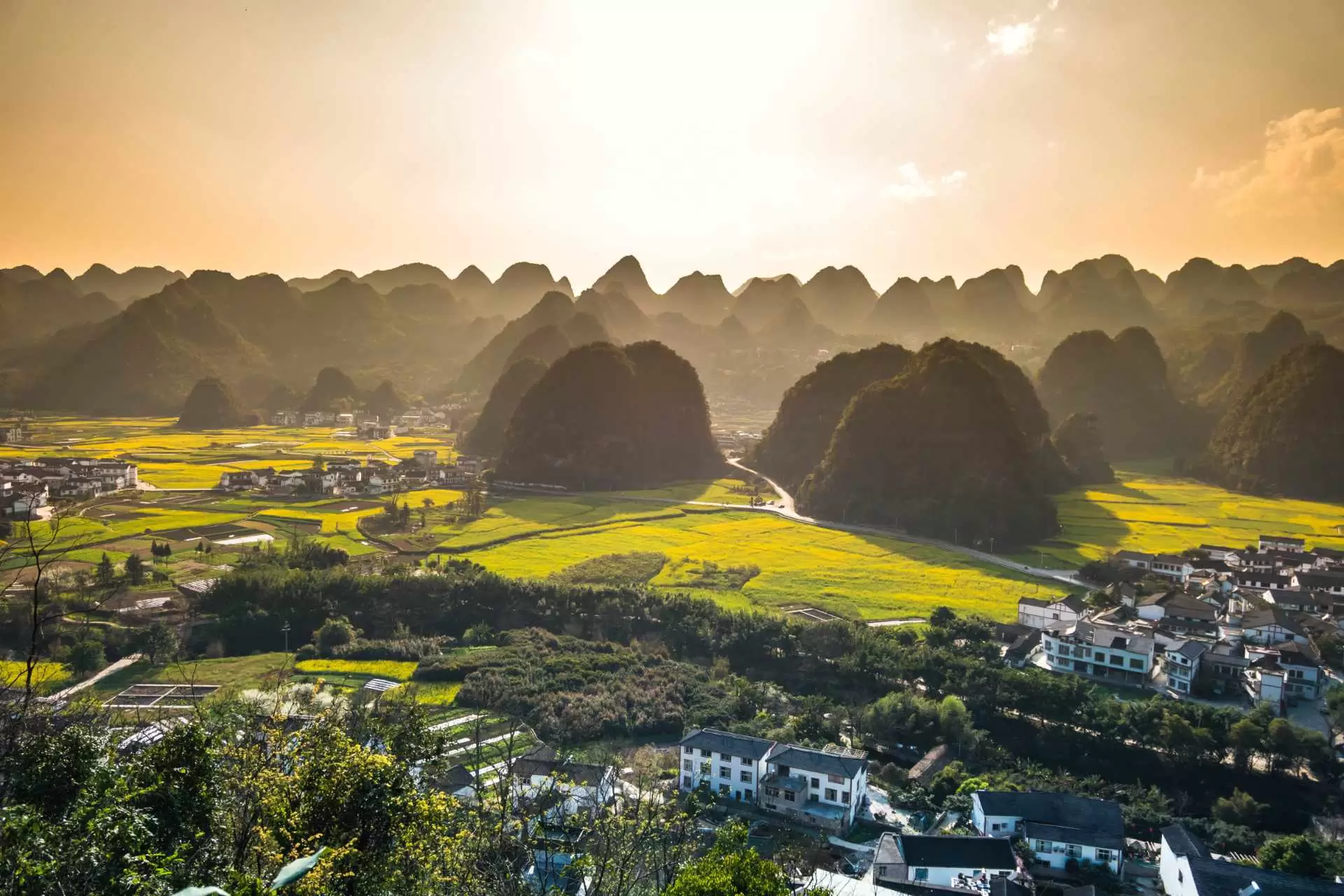
Wanfenglin is Qianxinan's signature landscape, with its conical peaks surrounding fields and Buyi villages, perfect for leisurely exploration by bicycle, hiking, or sightseeing bus. Malinghe Canyon is known for its cliffs and waterfalls, while Wanfeng Lake is ideal for boating, fishing, and enjoying the island scenery. Qinglong's Twenty-Four Turns records the history of transportation during the War of Resistance Against Japan, while Anlong Zhaodi and Zhenfeng Shuangru Peak each possess unique cultural and geological features. In Xingyi, you can try Wanfenglin fried rice, "Shuabatou" (a local dish), mutton rice noodles, and Zhenfeng glutinous rice. At night, you can listen to Buyi Bayin (eight-tone music) and watch ethnic song and dance performances. Here, you'll find both the grandeur of mountains and rivers and the relaxed pace of rural life.
Discover Guizhou's natural scenery, ethnic cultures and rich heritage, and join us in promoting exchange and cooperation between Guizhou and Singapore.